
September’s scrap market held the line across Chicago and all regions, supported by balanced supply and demand despite several scheduled mill outages heading into the fall. Ferrous scrap prices are sideways from August, while prime scrap continues to benefit from limited supply, strong hot-rolled coil pricing (HRC), and higher pig iron costs.
Meanwhile, the non-ferrous market continues to be shaped by trade uncertainty and shifting global demand. U.S.-Canada tariff uncertainty remains a key factor for aluminum, nickel continues to drive stainless steel pricing, and copper remains supported by tight supply and strong industrial demand.
Chicago’s Ferrous Scrap Market

Prime grades in Chicago have remained remarkably stable this year, supported by steady domestic mill demand for high-quality material, while obsolete grades have faced multiple downward price adjustments. That strength in the prime market has continued into September.
Prime Grades. Prime pricing held sideways again in September, marking the eighth consecutive month without a change in Chicago. HRC is trading near $1,220 per short ton—its highest level since May 2022—while the spread between HRC and Chicago No. 1 Busheling has widened to approximately $946 per gross ton, approaching levels last seen during the 2021–22 post-pandemic market peak.
Obsolete Grades. Obsolete grades—including Heavy Melt (HMS), Shredded Scrap and Turnings—have experienced several price declines this year, while Chicago’s prime grades have remained unchanged for eight consecutive months. Despite pressure from scheduled mill downtime, weak export demand and abundant regional supply, continued Midwest buying helped obsolete grades hold steady, with no price change from August to September.
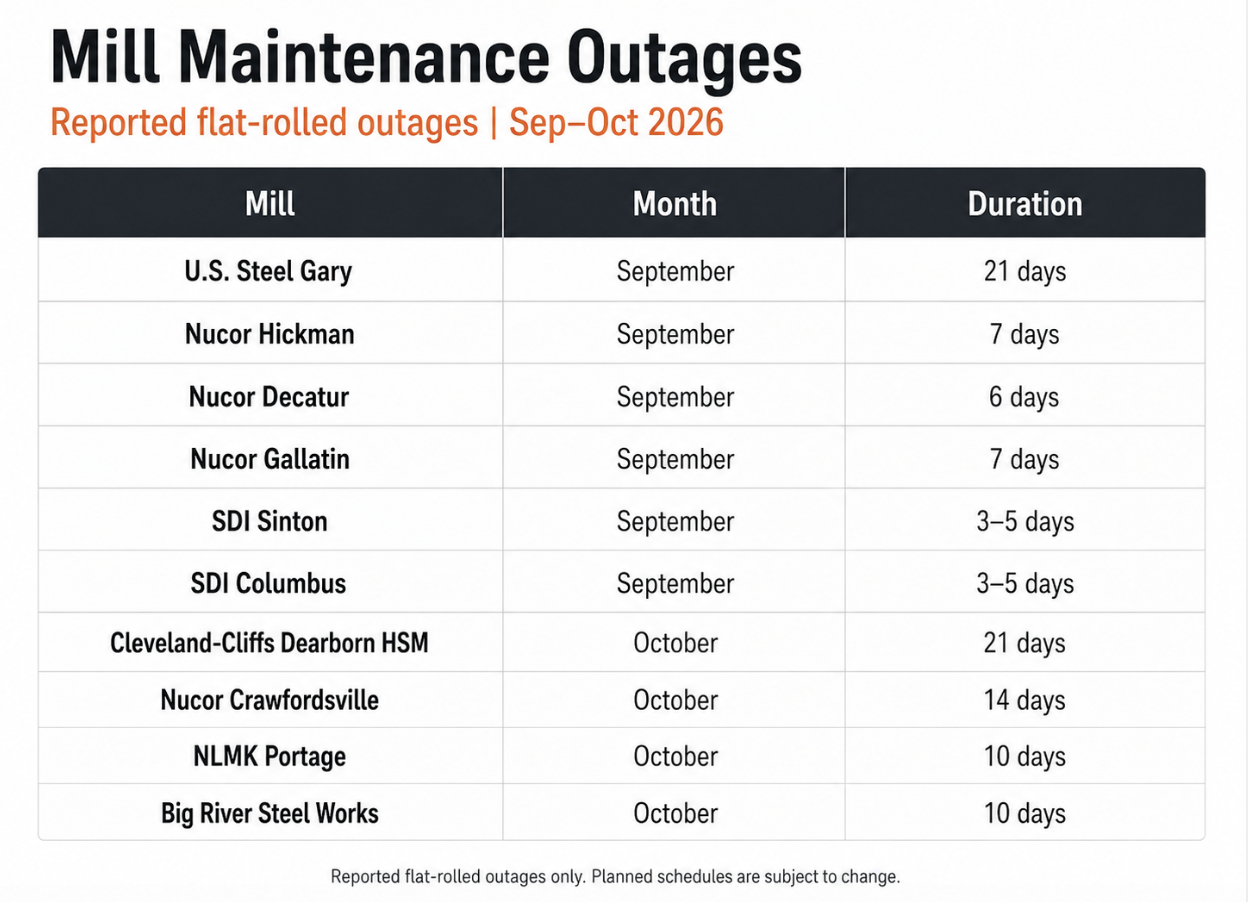
“Holding steady despite 16 upcoming mill outages is a positive sign that scrap supply and demand remain well balanced heading into the fall.” said Lou Plucinski, President of BL Duke.
Chicago’s Non-Ferrous Scrap Market
Aluminum. Trade uncertainty between the U.S. and Canada continues to pressure the North American aluminum market. The proposed trade agreement fell apart in August, leaving 50% U.S. tariffs on Canadian aluminum in place. Canada is also increasing counter-tariffs on certain U.S. steel and aluminum products to 50%, effective September 8. Because Canada is a major aluminum supplier to the U.S., continued tariff uncertainty keeps North American physical premiums elevated even as underlying LME aluminum pricing remains relatively flat.
Stainless Steel. Stainless steel remains relatively stable, with nickel continuing to be the key market to watch over the next 30–60 days. A sustained LME nickel move above approximately $17,000 per metric ton ($7.71/lb.), paired with stronger stainless mill demand, could provide upward support for 304 and 316 scrap values. If nickel remains range-bound and demand stays weak, stainless scrap pricing is likely to remain relatively flat.

Copper. Copper scrap remains one of the stronger non-ferrous markets. Tight global supply, strong industrial demand, and continued investment in data centers, grid infrastructure, and electrification continue to support pricing. The near-term outlook remains bullish, with copper scrap values staying well supported in September.












Let’s Connect
We’ll work hard to earn your business — and even harder to keep it.